
Breakthrough in Team Stainless project to combat water leakage in Italy
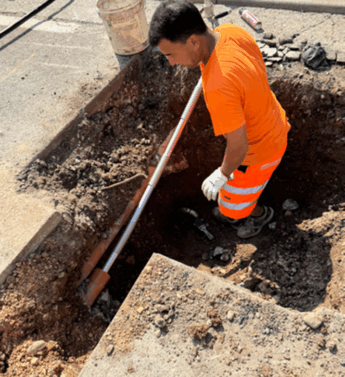
Type 316 stainless steel flexible service lines are proving to be a game-changer for water infrastructure. Already successful in dramatically reducing water loss across some of Asia’s largest cities, this durable, safe, and sustainable solution is now gaining traction in Italy.
Over the past few years, Team Stainless has worked with Italian water utilities to support the introduction of Type 316 stainless steel service lines to reduce water leakage. We are delighted to report that A2A, one of the utilities, has now installed over 100 Type 316 stainless steel service connections in Brescia. Significantly, they replaced all connections along approximately 1km of water mains in a residential subdistrict, which had been plagued by a high leakage rate. All roughly 20 previous trials across Italy and Malta involved replacing individual tubes. In total, 106 service connections were installed, using 280 meters of 40mm diameter partially corrugated tubes. Another 30 or so service connections are planned for replacement before the end of the year.
In Ancona, Vivaservizi, another Italian utility, has replaced 130 connections along one road in the city. Plans are in place to replace a further 300 connections in the coming months, not only in Ancona but also nearby towns. The total length of the affected network where service connections have been or will be replaced is approximately 15km, 15% of which consists of service connections, the rest are the water mains.
In Belluno, SIB, have replaced 60 connections in one area, with plans to replace a further 60 connections.
These installations in Brescia, Ancona and Belluno, expected to total around 700 by the end of the year, represent a significant breakthrough in this Team Stainless project.
Work continues in Italy to accelerate the introduction of stainless steel service lines across a number of utilities. Reducing water loss isn’t just about improving infrastructure; it is about sustainability, resilience, and safeguarding one of our planet’s most precious resources.